
Healthcare and Clinics
Virtual Tours for Hospitals and Healthcare Facilities
Virtual tours for hospitals and healthcare clinics ease first-visit anxiety and give referring partners visual proof of your clinical standards. Patients arriving at hospitals, clinics and healthcare campuses often feel anxious about unfamiliar surroundings. When they can explore your facility online beforehand, see the reception area, understand the layout and identify where they need to go, that anxiety reduces before they walk through the door. For referral partners and commissioners, visual evidence of your clinical environment builds the confidence needed to recommend your services.
360 View creates digital spatial records of healthcare facilities using Google Street View, Matterport Digital Twins, point cloud scanning and immersive wayfinding. These records serve multiple purposes simultaneously. They reassure patients, support estates and compliance teams, provide verified documentation for CQC and regulatory inspections, and make your facility discoverable to the people who need your services.
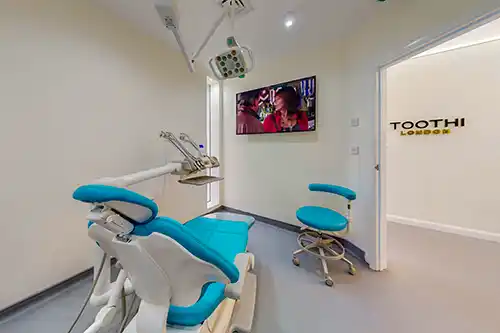
Reduce Patient Anxiety, Improve Wayfinding and Support Facility Compliance
Reassure Patients Before Their First Appointment
Patients attending a new clinic or hospital department for the first time often experience heightened anxiety about the unknown. A virtual walkthrough of your reception, waiting areas, consulting rooms and treatment spaces helps patients visualise their visit in advance. When people know what to expect, they arrive calmer and more prepared for their appointment.
Support Referral Partners With Visual Facility Evidence
GPs, consultants and commissioning bodies refer patients to facilities they trust. An interactive virtual tour of your clinical environment provides visual evidence of cleanliness, equipment quality and spatial standards. This is especially valuable for private healthcare providers competing for referrals based on perceived facility quality.
Maintain Accurate Facility Records for Estates and Compliance
NHS trusts and private healthcare operators manage large, complex estates where physical inspection of every department is time-consuming and expensive. Digital twins and point cloud data provide a permanent spatial record that estates teams use for maintenance planning, space utilisation reviews and regulatory compliance documentation.
Improve Staff Orientation Across Multi-Site Operations
Healthcare organisations operating across multiple locations use spatial records to orient new staff, locum doctors and agency nurses before they arrive on site. Familiarising clinical professionals with unfamiliar departments in advance reduces orientation time and improves confidence during their first shifts.
Four Capture Methods Designed Around Clinical Requirements
Healthcare environments present specific capture challenges including patient privacy, infection control protocols and the need to work around clinical schedules. Our four capture methods are adapted to meet these requirements, with each service contributing a distinct layer of spatial documentation that serves clinical, operational and marketing objectives.
Publish Your Facility to Google Maps So Patients Find You With Confidence
Make Your Clinic Visible and Trustworthy on Google
We capture and publish 360-degree imagery of your facility entrance, reception, waiting areas and public corridors to Google Maps. Patients searching for healthcare services in your area see an inviting, professional environment directly within your Google Business Profile before they make contact.
Build Trust With Prospective Patients Who Research Online
Healthcare decisions are deeply personal. Patients researching clinics, dental practices and specialist centres review online imagery carefully before choosing a provider. Published Street View content shows your facility is transparent, professional and welcoming, which directly influences patient acquisition.
Accurate Map Placement for Hospitals With Multiple Entrances
Large hospital sites and healthcare campuses often have multiple entrances, departments and car parks. We ensure your Google Maps pin is correctly placed and that Street View coverage guides patients to the right entrance for their department, reducing missed appointments caused by navigation confusion.
Give Patients and Referrers a Complete View of Your Clinical Environment
Virtual Facility Tours for Patients and Referral Partners
Matterport Digital Twins create interactive 3D walkthroughs of your clinical spaces. Prospective patients explore consulting rooms, treatment areas, recovery suites and rehabilitation facilities remotely. Referral partners use these models to verify the quality and suitability of your environment before directing their patients to you.
Spatial Records for Estates Management and Maintenance
Estates teams use digital twins as living records of departments, corridors, plant rooms and service areas. These models support condition assessments, space planning, refurbishment scoping and maintenance prioritisation across healthcare portfolios without requiring physical walkthroughs of every department.
Operational Planning Without Clinical Disruption
Planning departments, infection control teams and capital project managers review spatial layouts remotely using digital twins. Ward reconfigurations, equipment installations and departmental moves can be planned visually before any physical work disrupts clinical operations.
Verified Spatial Data for Healthcare Design, Estates and Compliance
Millimetre-Precise Records for Healthcare Estate Planning
Point cloud scanning captures the exact geometry of clinical spaces, plant rooms, corridors and structural elements. Architects and engineers working on healthcare projects use this verified dimensional data as the foundation for their designs, ensuring accuracy that meets NHS and private healthcare facility standards.
Supporting HTM and HBN Compliance Requirements
Healthcare premises in the UK must comply with Health Technical Memoranda and Health Building Notes that specify spatial requirements for clinical areas. Point cloud data provides the verified dimensional evidence needed to demonstrate compliance during regulatory reviews and capital planning submissions.
Integration With Healthcare BIM and Estates Software
Scan data outputs in formats compatible with Revit, AutoCAD and healthcare estates management platforms. This allows seamless integration with existing Building Information Models and Computer Aided Facility Management systems used by NHS trusts and private healthcare groups.
Guide Patients Through Complex Hospital and Campus Layouts
Patient Navigation From Car Park to Department
Hospital sites are notoriously difficult to navigate. Immersive wayfinding connects car park routes, entrance lobbies and internal corridors so patients can preview their entire journey from arrival to their specific department. This is particularly valuable for elderly patients, those with mobility limitations and visitors attending for the first time.
Accessible Route Planning for Patients With Mobility Needs
Patients using wheelchairs, mobility aids or requiring step-free access can identify suitable routes through your facility in advance. Clear visual previews of lift locations, ramp access and accessible entrances help patients plan their visit with confidence and independence.
Reduce Missed Appointments Caused by Navigation Confusion
Patients who get lost within large hospital campuses frequently arrive late or miss their appointments entirely. When patients can preview the route to their department before leaving home, attendance rates improve and clinical scheduling runs more smoothly.
What a Typical Healthcare Facility Project Looks Like
Mapping the Patient Journey From Arrival to Department
A typical healthcare project begins with Google Street View coverage of the facility entrance, reception and main corridors. For hospital campuses, we extend this to cover car parks, walkways and multiple building entrances so patients can preview the complete arrival experience.
Creating Digital Twins of Key Clinical and Public Spaces
Matterport Digital Twins are created for consulting rooms, waiting areas, treatment suites, rehabilitation spaces and any departments that benefit from visual documentation. These models serve both patient-facing communication and internal estates management purposes.
Integrating With Your Website and Patient Communications
Virtual tours and Street View imagery are delivered with embed codes ready for your website, patient portal and appointment confirmation emails. When patients receive their booking confirmation alongside a visual preview of the department they will visit, attendance and preparedness both improve.
Estates Documentation and Ongoing Spatial Records
For organisations requiring ongoing facility records, we deliver point cloud data and digital twins that integrate with estates management workflows. These records support maintenance scheduling, space utilisation analysis, capital planning submissions and CQC or regulatory inspection preparation.
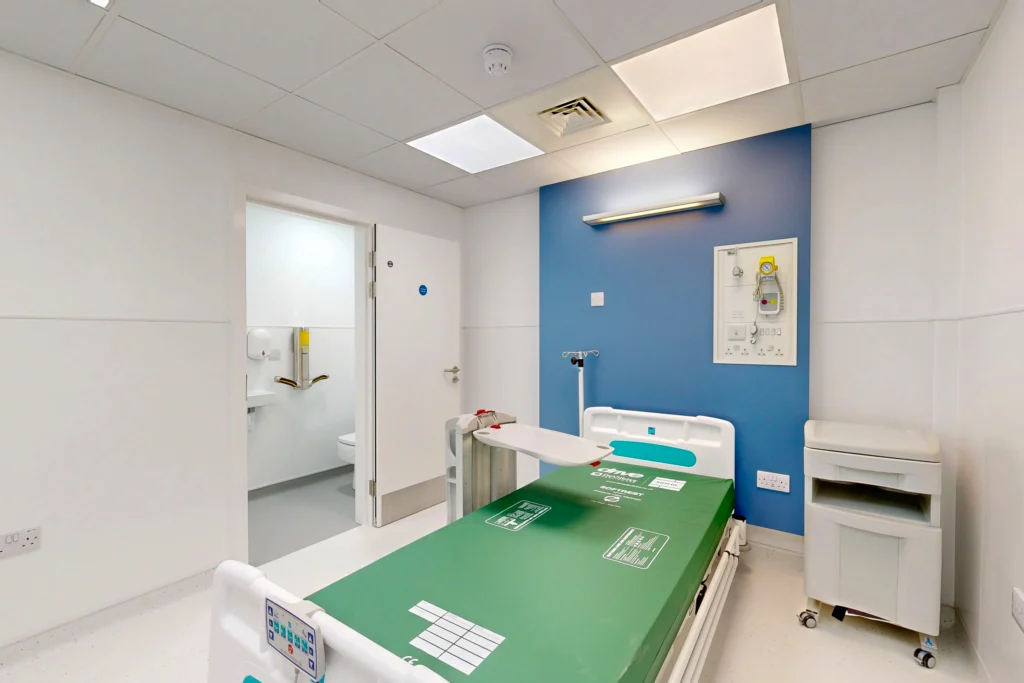
How AI and Voice Search Are Changing Discovery for Healthcare & Clinics
AI assistants, voice search platforms, and spatial discovery tools are changing how people find and evaluate hospitals, clinics, and healthcare facilities. Organisations with structured spatial data gain a discovery advantage over those relying on flat images and text descriptions alone.
When your space is captured as a Google Street View tour, Matterport digital twin, or point cloud scan, AI systems can reference your environment directly in search results. This means your hospitals appears in AI-generated answers, voice search responses, and spatial platform recommendations.
360 View captures your space in formats that both humans and machines can navigate, ensuring your organisation is discoverable today and positioned for AI-powered search tomorrow.
Frequently Asked Questions
Quick answers for leasing teams, operations, and technical stakeholders.
How do you manage patient privacy and GDPR during capture in clinical settings?
All capture is conducted in full compliance with GDPR and healthcare data protection requirements. We photograph public and clinical areas only when patients are not present or with appropriate consent arrangements in place. Any individuals who inadvertently appear in imagery are automatically blurred before publication. We work with your information governance team to agree protocols before capture begins and can exclude any sensitive areas from the published content entirely.
What does a healthcare facility virtual tour project typically cost?
Costs vary depending on the size and complexity of the facility. A focused project covering a single clinic reception, consulting rooms and key treatment areas typically starts from a few hundred pounds. Larger projects across hospital departments, multiple buildings or campus-wide coverage are quoted individually after a site assessment. We provide a transparent breakdown so your procurement team has full clarity before any commitment.
Can you work around NHS clinical schedules and restricted access areas?
Yes. We plan all healthcare capture around clinical operations. Typically this means working early mornings, evenings or weekends when patient activity is lowest. We coordinate with your facilities and departmental managers to avoid disruption to clinics, theatres or patient-facing services. Restricted areas such as operating theatres, ICUs and secure wards can be excluded from the capture scope or photographed under supervised conditions as agreed with your team.
How do digital twins help with CQC inspection preparation?
Digital twins provide estates and compliance teams with a visual spatial record of your facility that can be reviewed remotely. During CQC inspection preparation, teams use these records to verify environmental standards, check signage compliance, review accessibility provisions and identify maintenance issues across departments without conducting a physical walkthrough of every area. This allows more thorough preparation in less time.
Can patients view the virtual tour on mobile devices before their appointment?
Yes. All Google Street View imagery and Matterport Digital Twins are fully responsive and work on smartphones, tablets and desktop computers. Patients can explore your facility using the same device they use to book appointments. No app downloads or special software are required. Virtual tours can be linked directly from appointment confirmation emails and your patient portal.
How does published Google Street View imagery affect patient acquisition?
Healthcare facilities with published Google Street View imagery present a more transparent, trustworthy profile to patients searching online. When your Google Business Profile includes a “See Inside” badge and immersive imagery of your reception and clinical environment, patients can visually verify the quality of your facility before making contact. This transparency is particularly influential for private healthcare providers where patients have a choice of provider.
What infection control procedures does your team follow during capture?
Our team follows your facility infection prevention protocols throughout the capture process. Equipment is cleaned before entering clinical areas. We wear appropriate PPE as directed by your infection control team. Capture scheduling avoids sterile preparation periods and active treatment sessions. We discuss specific requirements during the planning phase and document the agreed protocols before any on-site work begins.
Can point cloud data integrate with our existing estates management system?
Yes. Point cloud scan data is delivered in standard formats including E57, RCP and LAS that integrate with common estates management platforms, AutoCAD, Revit and CAFM systems. If your organisation uses a specific estates or BIM platform, we can discuss output format requirements during the planning phase to ensure seamless integration with your existing workflows.
How do you handle sensitive clinical areas that should not be publicly visible?
We agree the capture scope with your team before any on-site work. Areas that should not appear in public-facing content are excluded from the capture plan entirely or documented under separate, access-controlled deliverables for internal use only. For example, patient treatment rooms may be captured for estates documentation but excluded from the publicly visible virtual tour. You retain full control over what is published and what remains internal.
Do you work with NHS trusts and private healthcare groups across multiple sites?
Yes. We work with NHS trusts, private hospital groups and specialist healthcare networks that require consistent spatial documentation across multiple locations. Multi-site projects benefit from standardised capture protocols, coordinated scheduling across your facilities and unified deliverable formats. We currently cover healthcare facilities across the UK and have experience working within NHS procurement frameworks.
✅ Didn’t see your question here? We’ll answer it personally, just get in touch.
Make Your Healthcare Facility Clear to Patients and Referral Partners
1. We Assess Your Facility Requirements
Tell us about your healthcare facility, the departments you want captured and your objectives. We design a capture plan that respects clinical schedules, patient privacy and infection control protocols.
2. We Capture Around Clinical Operations
Our team works outside peak clinical hours and follows your infection prevention requirements throughout. We then process all data, build your digital spatial records and prepare everything for publishing and integration.
3. Your Facility Becomes Digitally Accessible
Street View publishes to Google Maps. Digital twins and spatial records are delivered ready for your website, patient communications, estates management systems and regulatory documentation.
Tell Us About Your Space